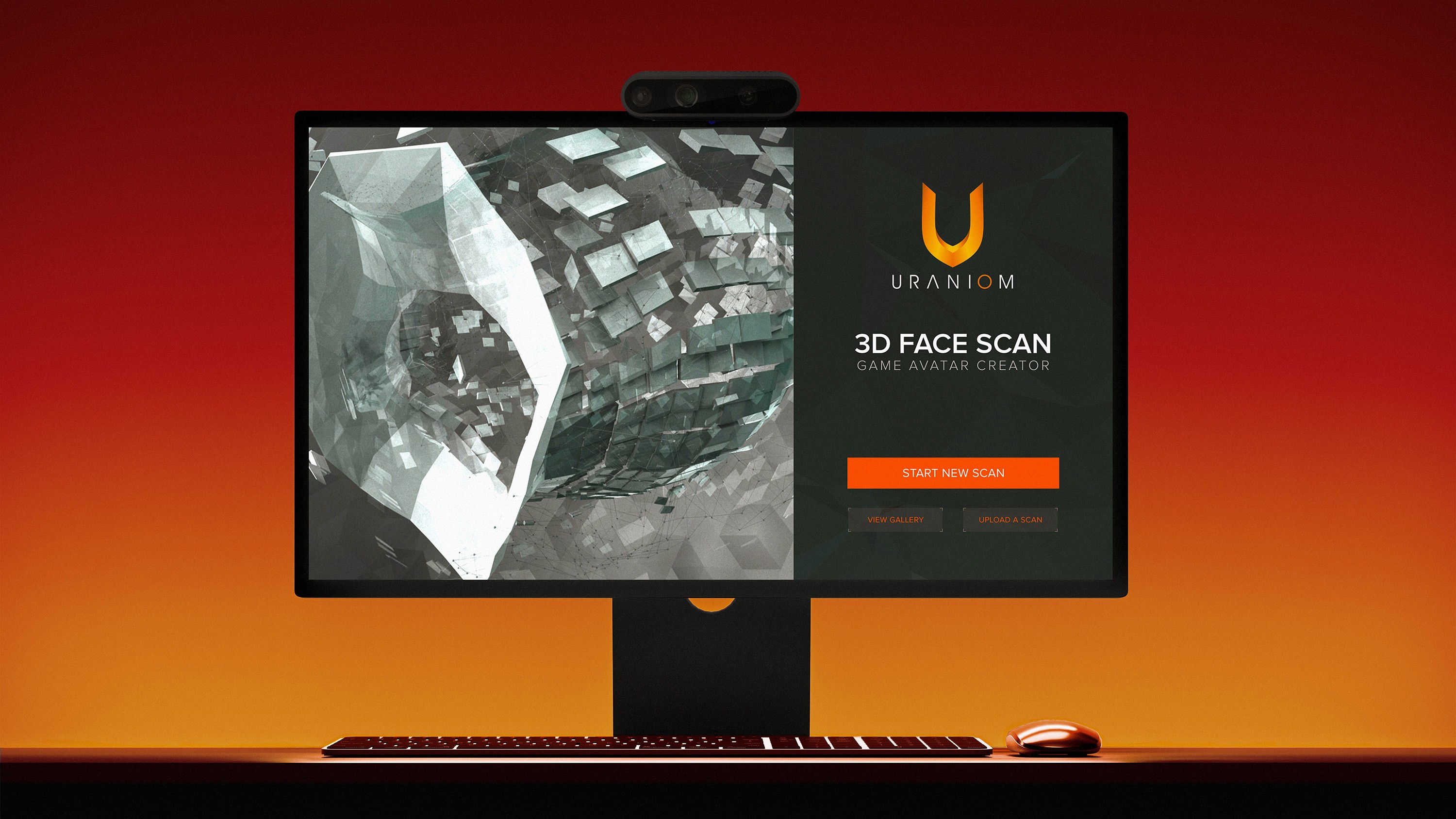
Intel 3D Face Scanning
Be in the game
Year
2017
EmployeR
POP
SERVICES
Product Design
Intel asked the team at POP to utilize their 3D RealSense camera technology to design a face scanning application that would enable gamers' faces to be added to games using Uraniom's technology, putting them directly in the action of popular games like Grand Theft Auto and the NBA 2K series. I led the user interface design and participated in developing the flow of the app which provided clear tutorials and creative UI solutions to achieve accurate face scans receiving the following praise from the Director of User Experience at Intel at the time: "the creative quality of this work is the best I’ve seen in years."
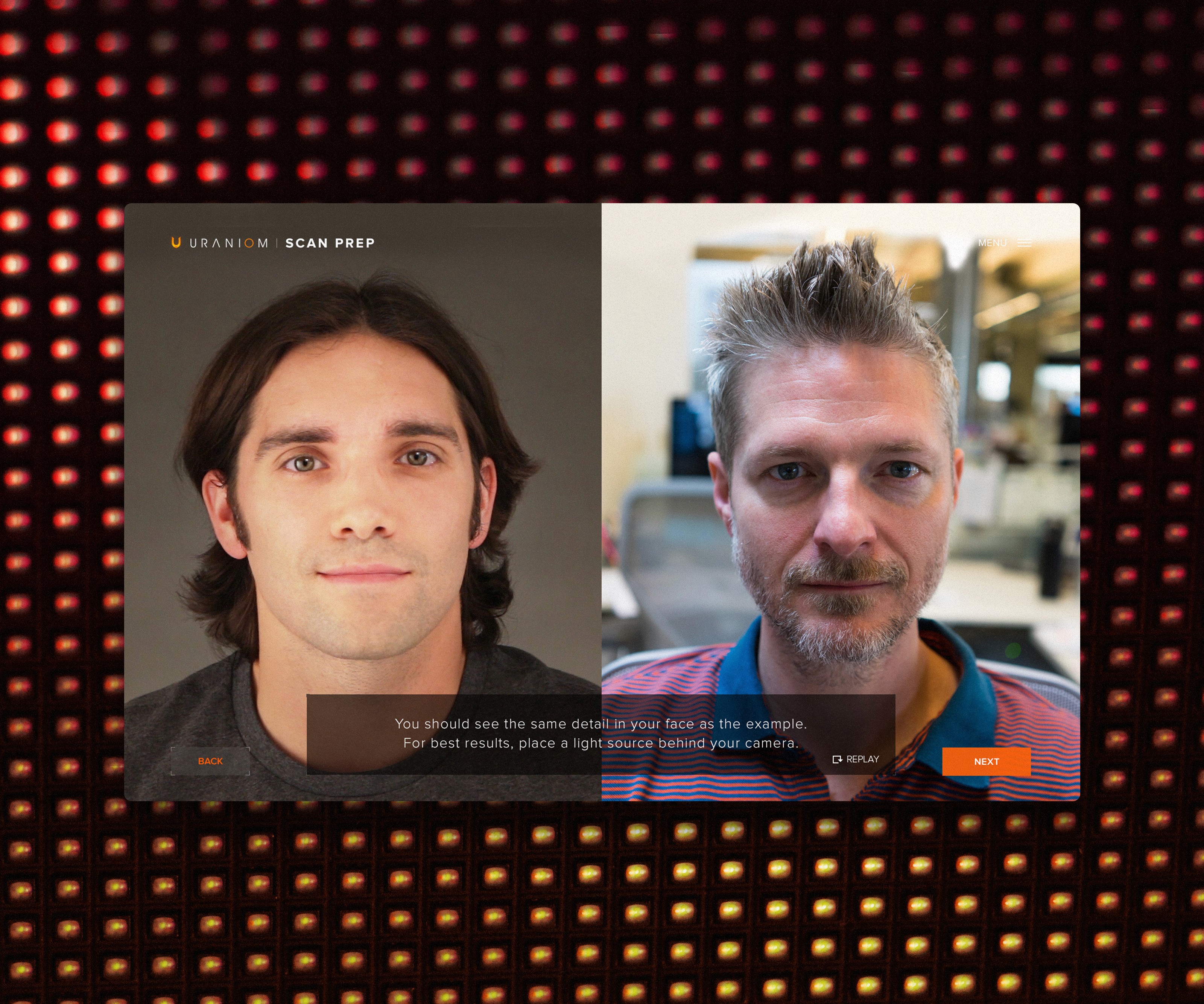
A tutorial was provided to the user with a side by side view to allow comparisons for ideal lighting, and to remove any obstructions near the face.
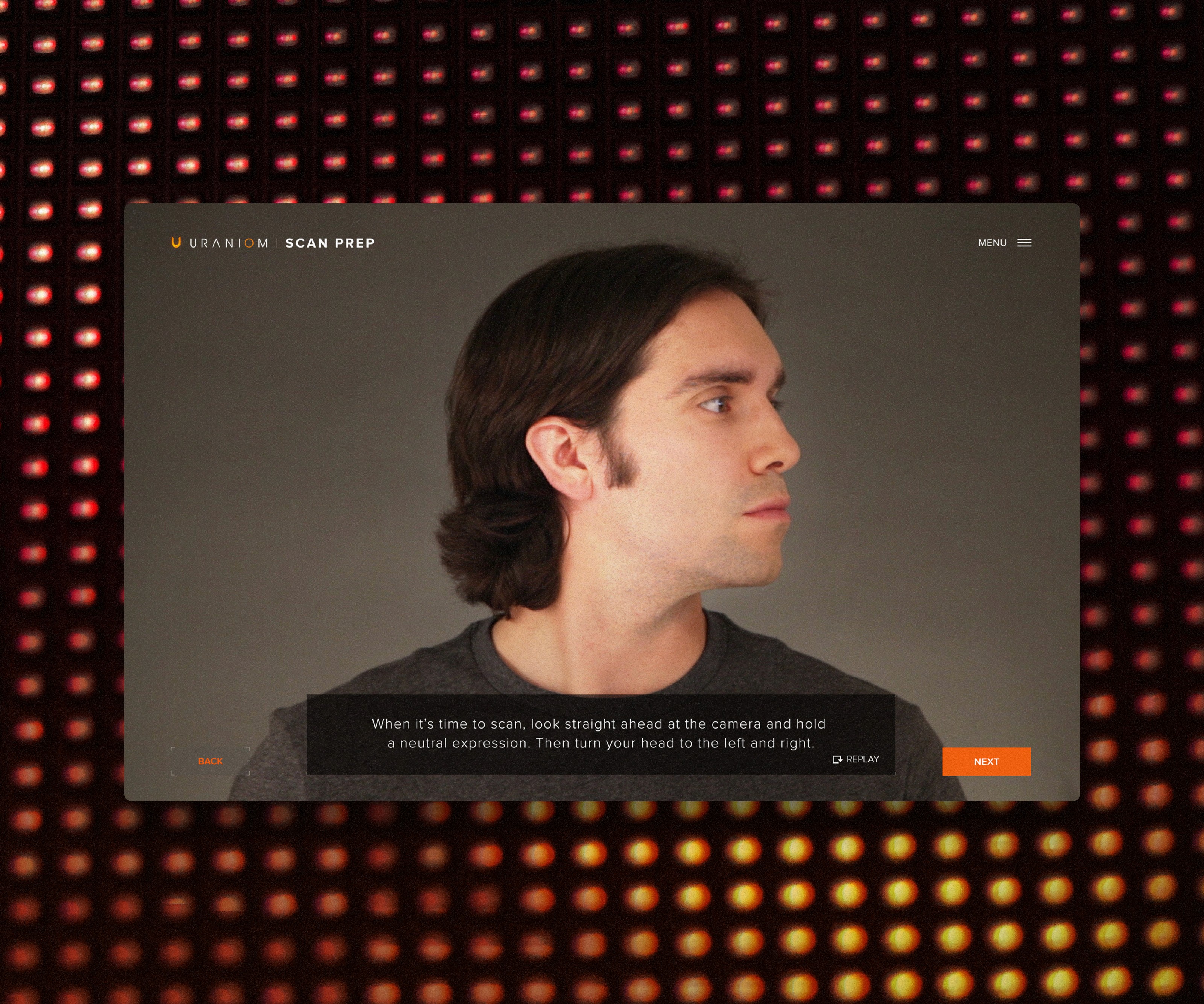
Then, an example of what the scanning process would entail was provided with the goal of increasing the success of the first scan, due to long generation times of the actual 3D face.
At the time, the limitations of the technology drove a lot of our decision making as we strived to ensure the user achieved a successful 3D scan of their face on their first time through. Long generation times for the 3D face itself meant this wasn't going to be an experience many would want to sit through on repeat occasions, and the camera technology itself required steady consistent movement during the scanning phase to generate an ideal 3D face.
To improve success for our users we first took them through a skippable tutorial that would compare their setup to an ideal scanning environment with key attention paid to how the face was lit, removing any obstacles around the face like glasses or headphones. This would be displayed until the user progressed to the next step of the tutorial in which we showed the actual scanning process so that the user could prepare for the steady look to their left and right.
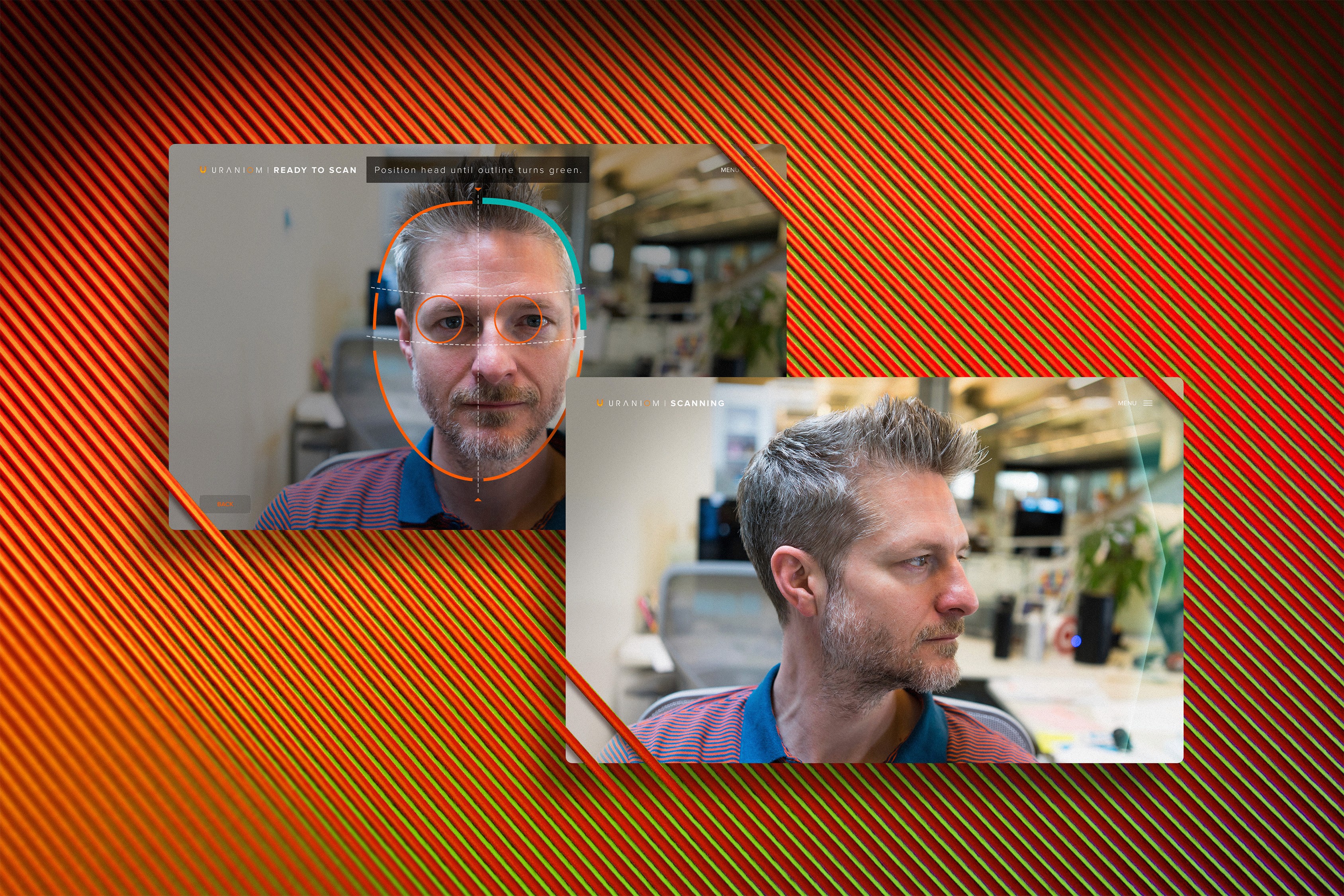
On screen cues were provided to the user to ensure the right height and placement, before visual and sounds cues indicated the direction the user needed to turn.
To initiate the scan the user would move their head into the provided mask on the screen changing in both size and color to indicate accurate placement within the space. Upon the full mask changing the scan would begin after a countdown. To avoid unnecessary eye movement during the scan we strove to provide directional sound and subtle visual motion on the screen to direct the user when to look left or right. Upon completion the 3D face would begin generating taking the user one step closer to entering their eligible game of choice.
The whole experience could be controlled by a keyboard, and mouse or game controller allowing users could navigate through the experience in whatever way they were most comfortable.
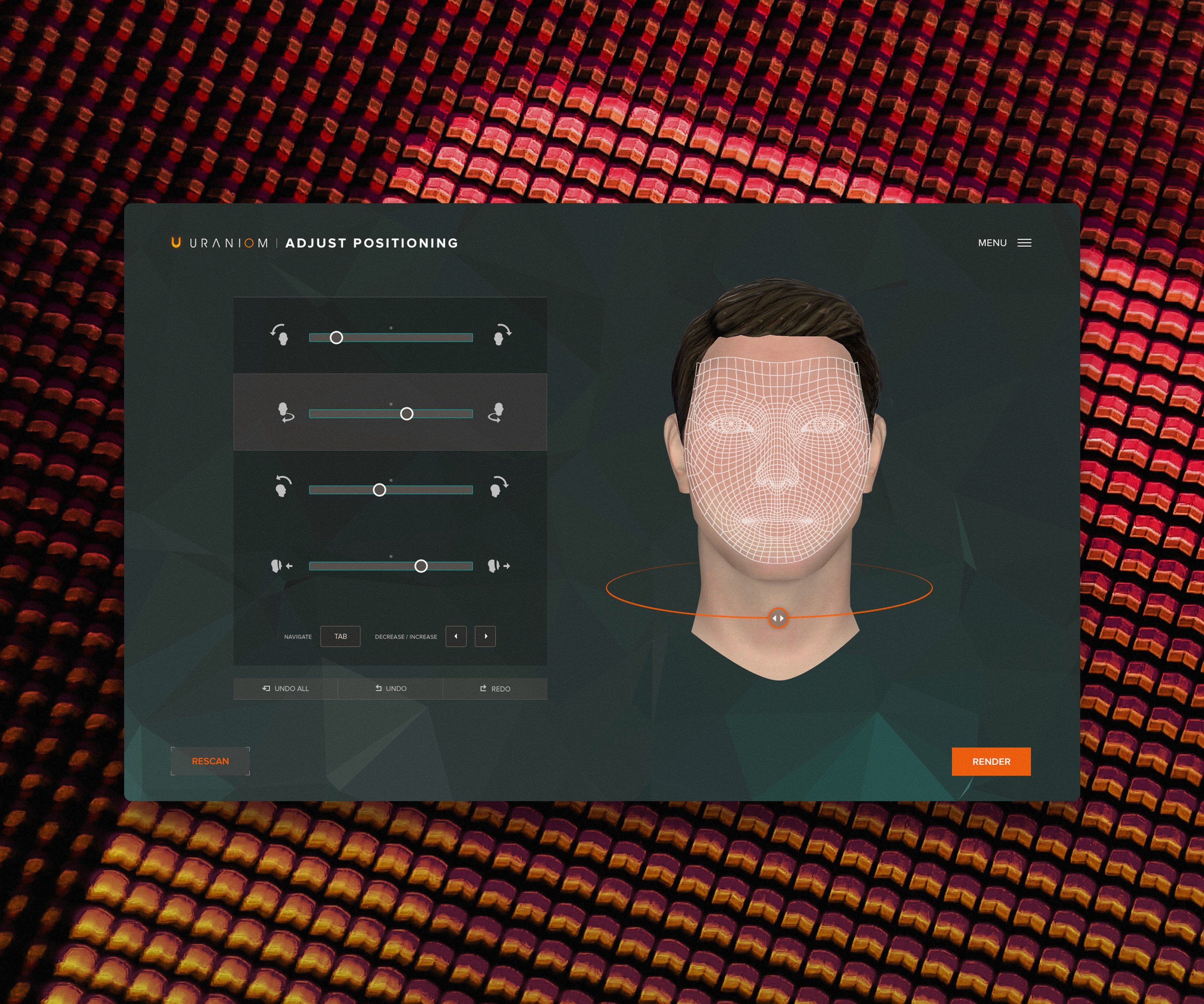
A facemesh could be generated prior to completion of 3D face, we used that as an opportunity to hide some of the generation time and improve the end result with the user placing the mesh on to a bust.
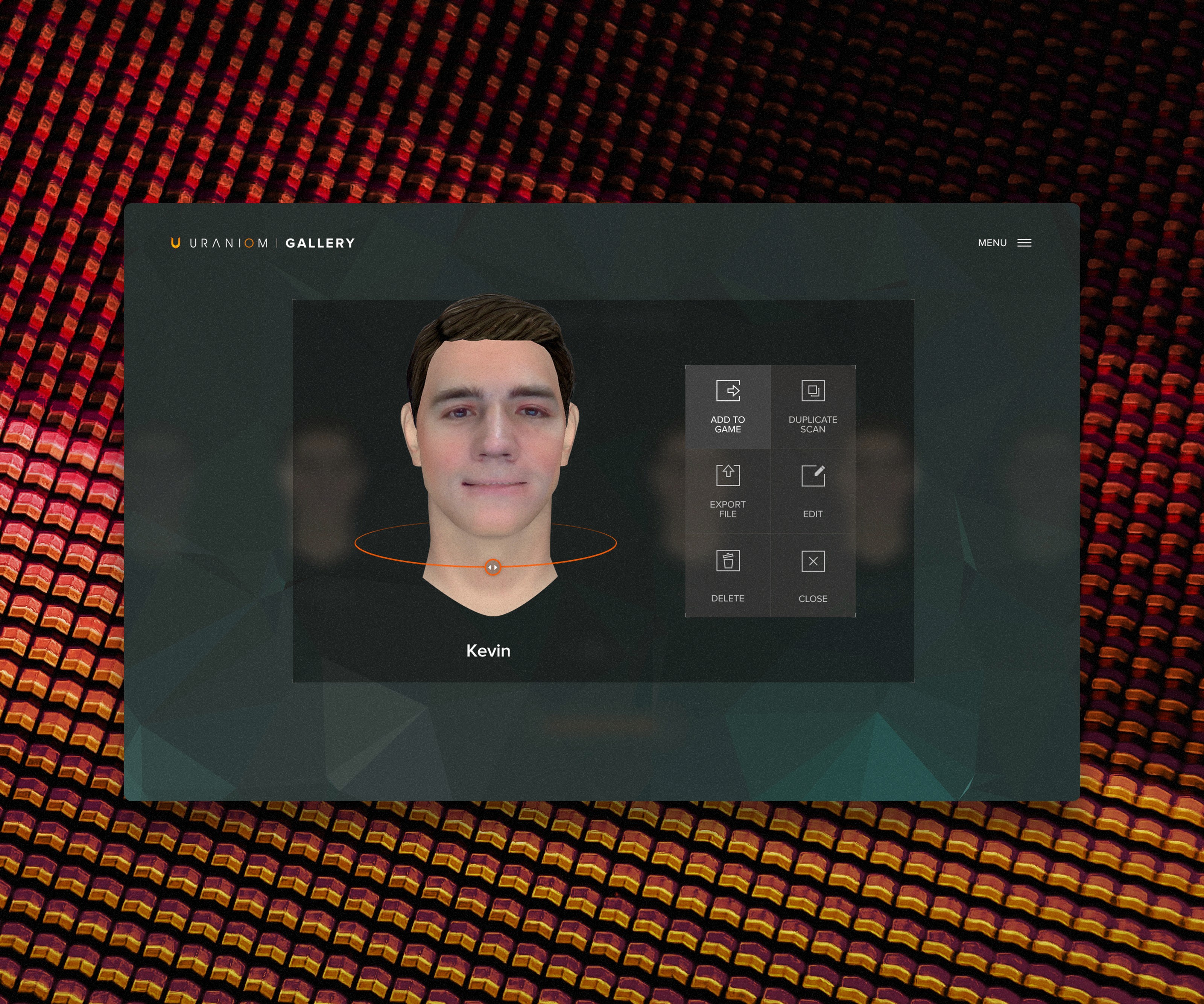
The completed 3D face could be adjusted for hair styles, bust skin color, and more before adding it to their favorite eligible game.
I worked through a variety of visual styles for the user interface, ultimately landing on a more minimal theme meant to evoke a loading environment before a game bursting into action. Ethereal, floating and avoiding obstruction to the 3D faces themselves which were the hero of the experience and supportive of the effortless scanning process we provided.
Creative Team
Associate Creative Director: Eric Rak
Senior Art Director: Corey Knafelz
Senior Visual Designer: Benjamin Mouch
Design Support: Joe Larrabee
UX Design: Di Dang
UX Design: Jeroen Bet

" height="2.1187359513420594px" id="P5kIJB7Ko" transform="translate(4.268 0)" width="11.73219480873486px"/><path d="M 2.13 11.637 L 0 11.637 L 0 0 L 2.13 0 Z" fill="rgb(15, 14, 14)" height="11.636652122173734px" id="xBplekXaY" transform="translate(13.87 0)" width="2.1296344887445002px"/><path d="M 1.509 14.942 L 0 13.447 L 13.563 0 L 15.073 1.496 Z" fill="rgb(15, 14, 14)" height="14.94221869628454px" id="DEz5S9WYM" transform="translate(0 1.058)" width="15.072818848944806px"/></g></svg>)
Contact
↴