Microsoft Sports Platform
Performance, unlocked
Year
2016
EmployeR
POP
SERVICES
Product Design
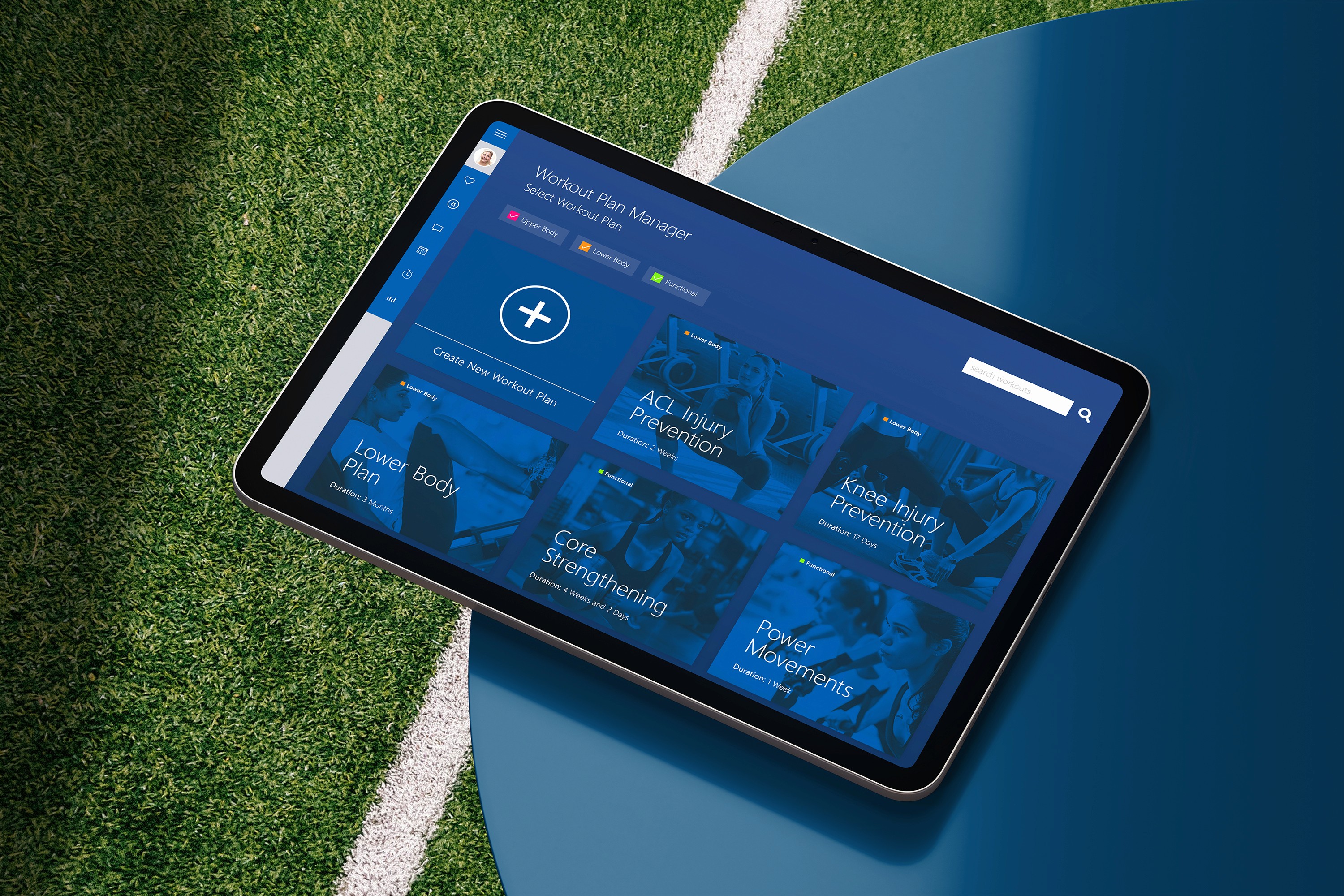
Microsoft looked for support in establishing their Sports Performance Platform which combined a library of sports-specific APIs, Microsoft Surface tablets, machine learning, and cloud computing into an all-encompassing digital experience for coaches and players on the field. The first iteration of the platform was built for, at the time, the Seattle Reign which had a unique partnership with POP. A local team was a perfect testing ground for the platform which Microsoft had aspirations of its use in the NFL and the Premier League.
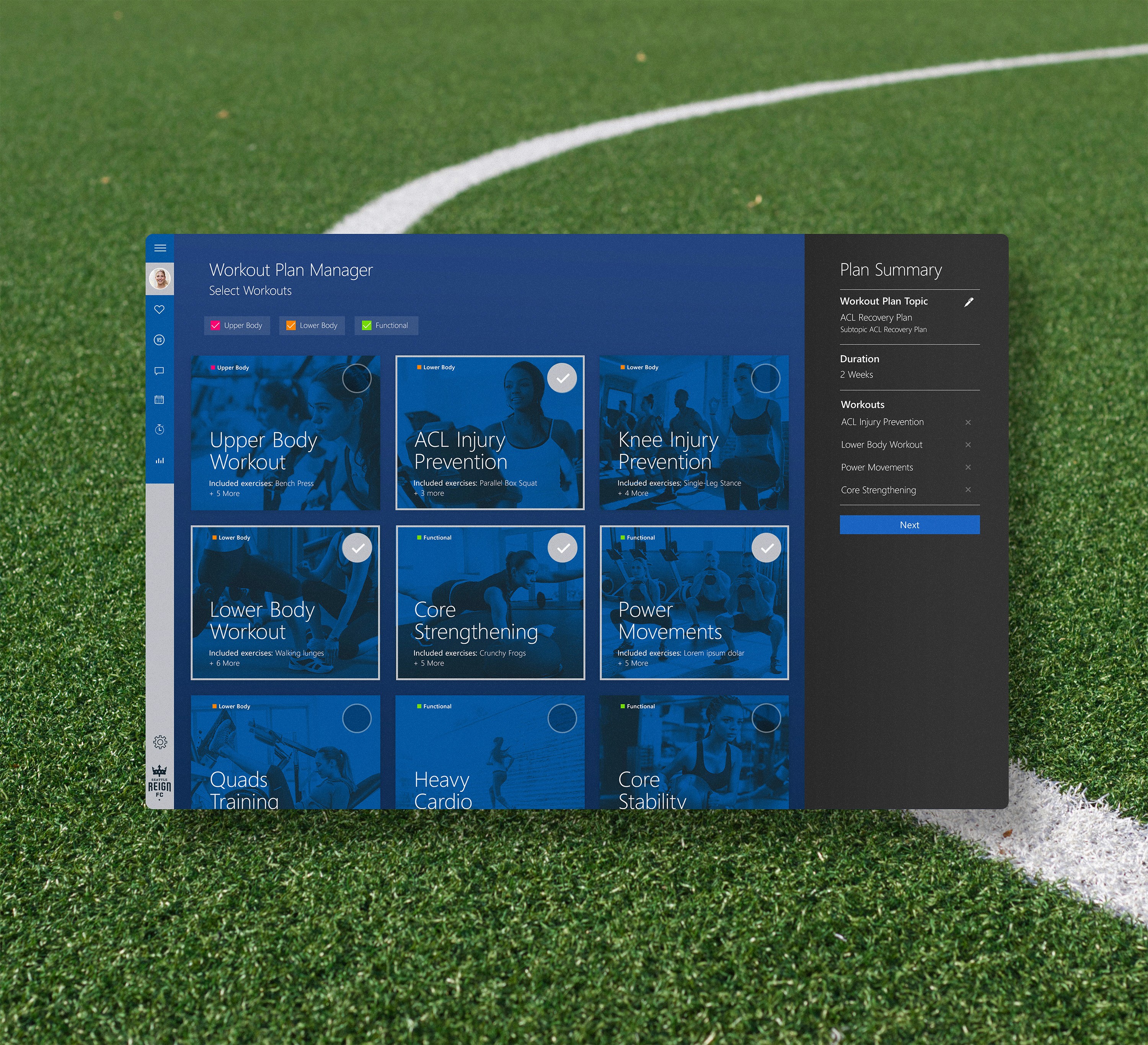
In defining a workout plan, the coach would select the exercises required from the workouts previously configured by the coach.
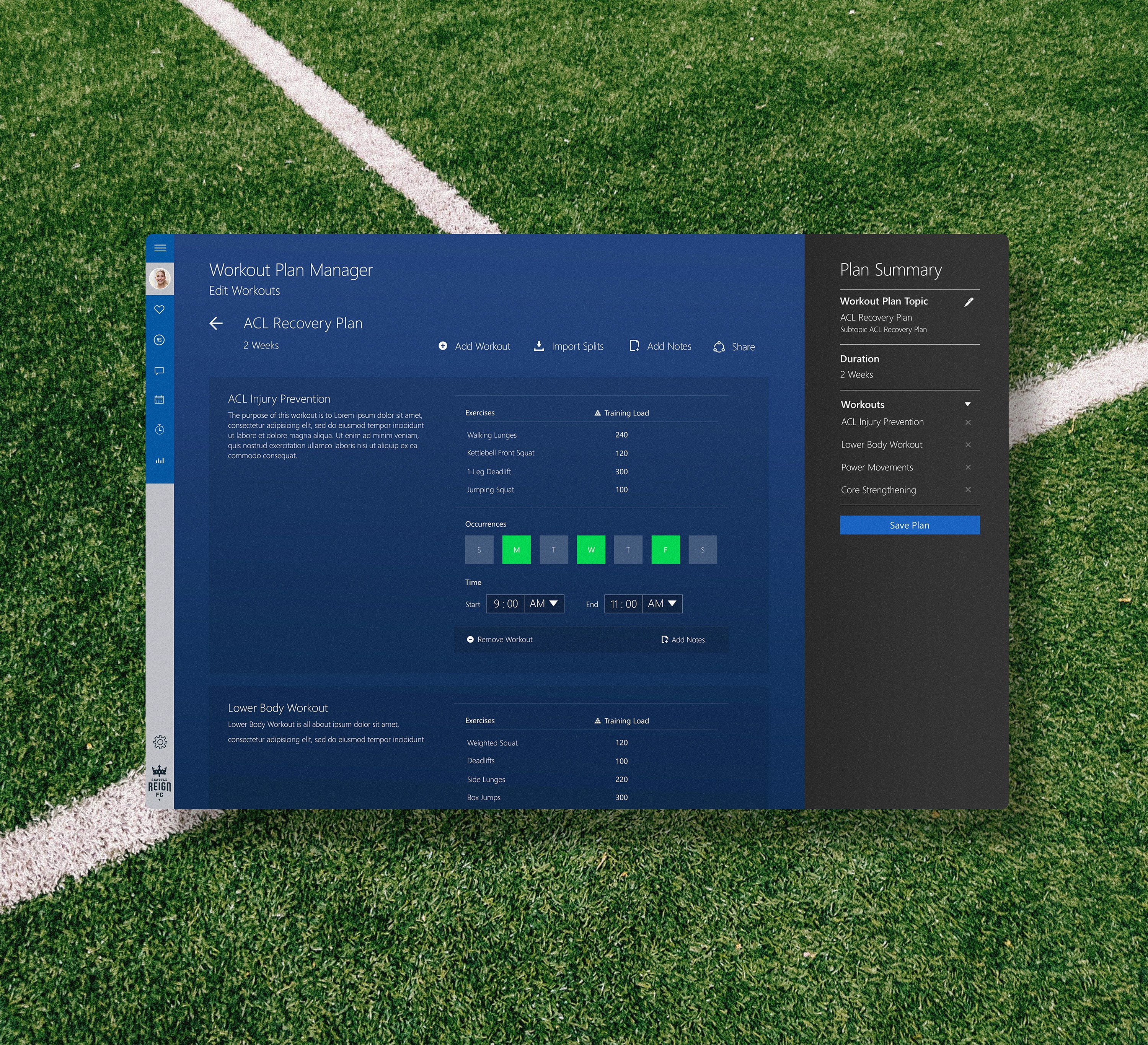
The coach would then be able to edit details about each workout, selecting the days and time of the workout.
Utilizing on-field research to drive our design decisions, we were each tasked with designing separate sections of the application that had unique views targeted towards the separate needs of coaches and players. There were areas for specific training exercises, soccer drills, and questionnaires that could be managed by the coaches and shared with players ahead of any coaching or training sessions.
I was focused on the creation and scheduling of workout plans, a series of workouts that could be modified and assigned to players on the team. In creating a workout plan, the coach would name and define the duration of the plan before selecting which workouts the plan would entail.
One of the more interesting details about this work was surfacing the idea of "training load" to the coach, derived from the sport-specific APIs Microsoft was looking to utilize and driven by biometric data collected from the players. The training load would help the coach ensure that they were not overexerting their players by giving them a sense of how much they were asking of the players across a workout. To complete creation, the coach could define the days, time and add any team-specific notes to finalize out the workout.
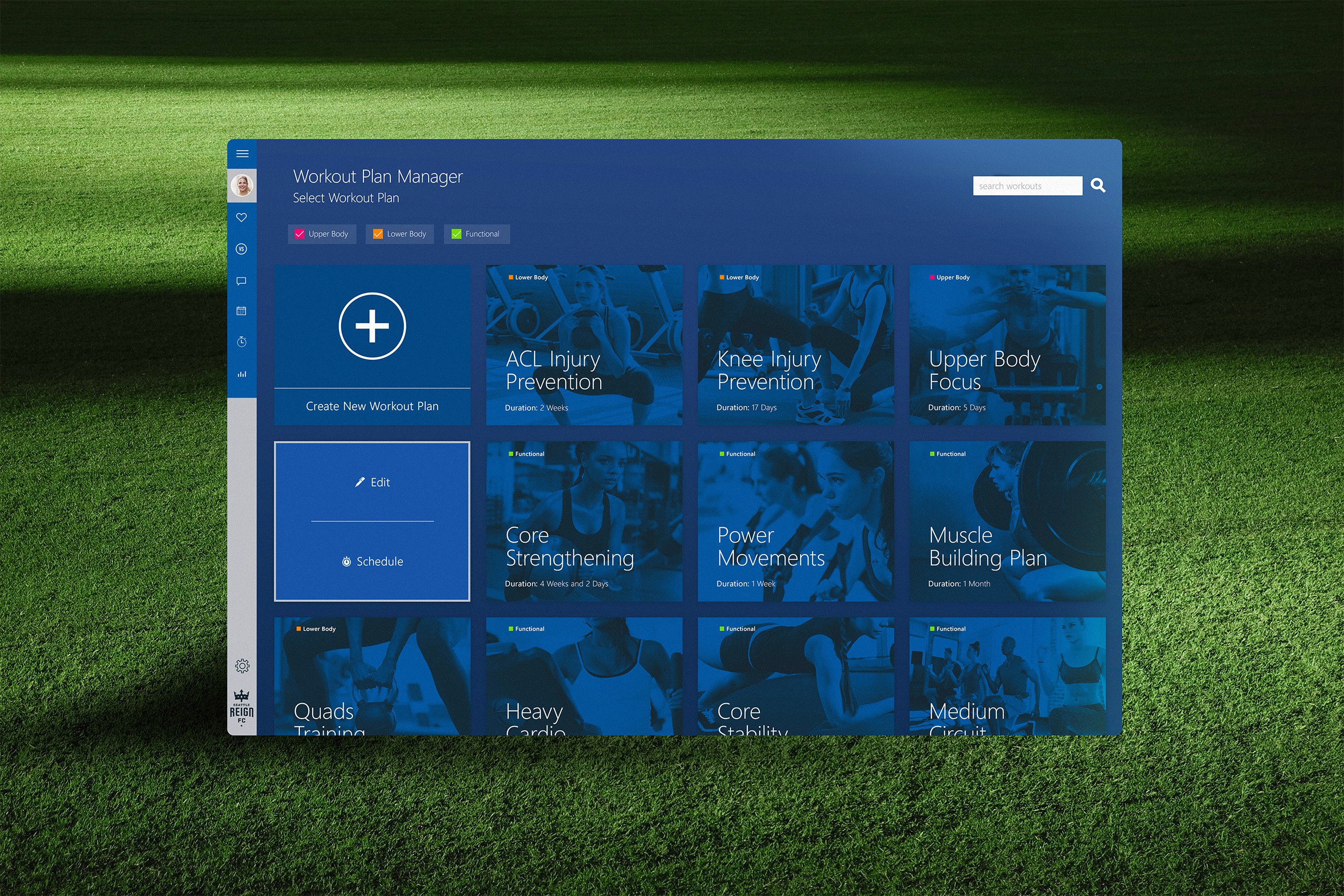
Once created, workout plans could be quickly edited or scheduled from the primary view with abilities to filter or search for a specific plan.
Scheduling and creation were broken into two separate flows to enable coaches to establish their basis of workouts, essentially tools of their trade, that they could make use of whenever a scenario may present itself for a player or set of players. When the coach was ready to schedule a workout plan, they would define which players the workout plan should be provided to with the ability to select players individually or their positions providing the coach with multiple ways of approaching how they wanted to schedule the workout plan.
From there, the coach would define when the workout plan would start on a calendar view with the team games pulled into the calendar. If the coach was inclined to add a post-workout questionnaire, they could completely customize the questions asked of the player allowing them to get a better sense of the exertion level of the workouts or the general mood of the players themselves to better tailor the workout plan in the future. This data-oriented approach was the heart of the Sports Science Platform as a way to put insights into the hands of the coaches.
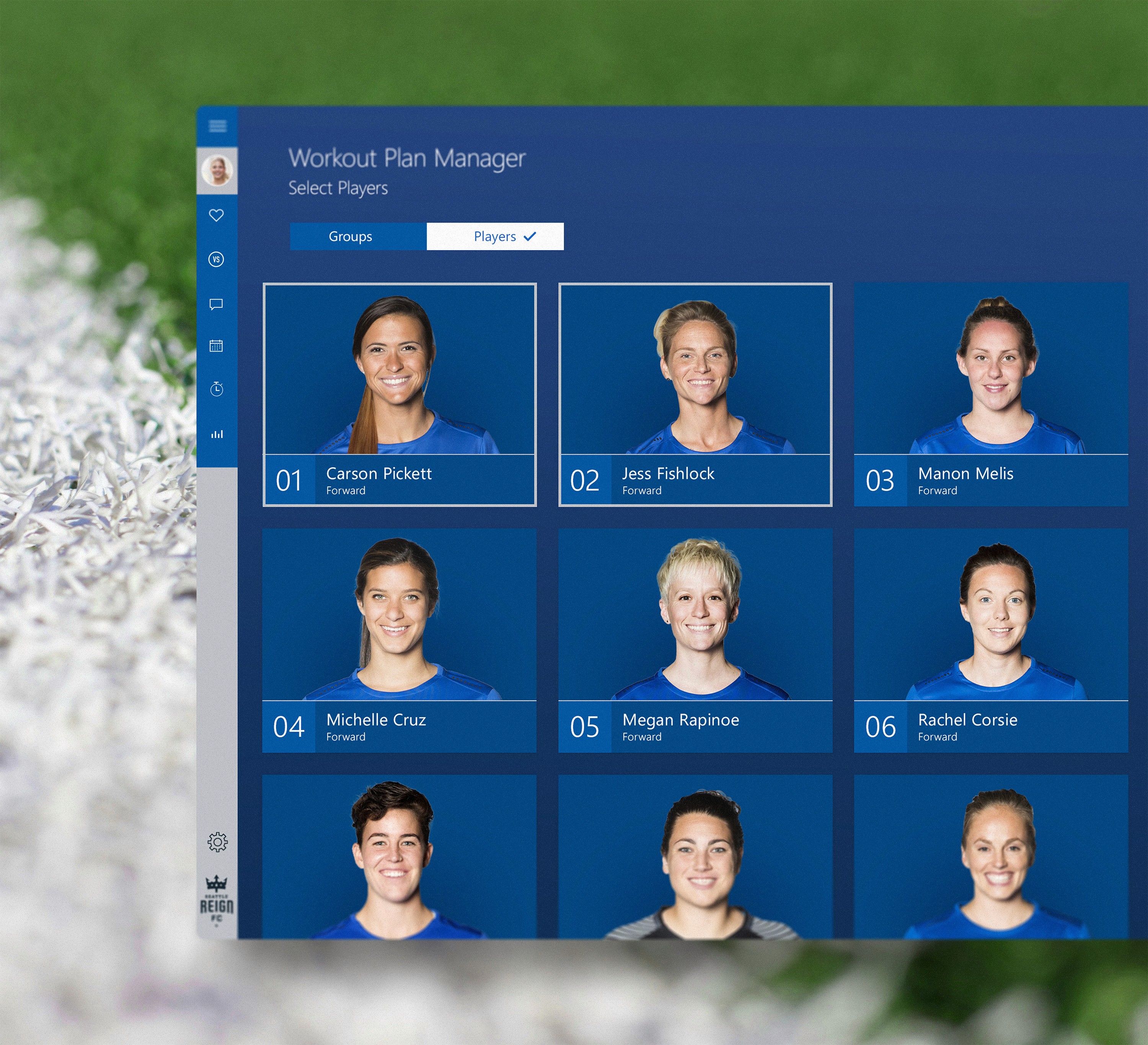
The experience brought in all sorts of details specific to the team such as players, positions and upcoming games, in order to tailor the experience to the coach's mindset.
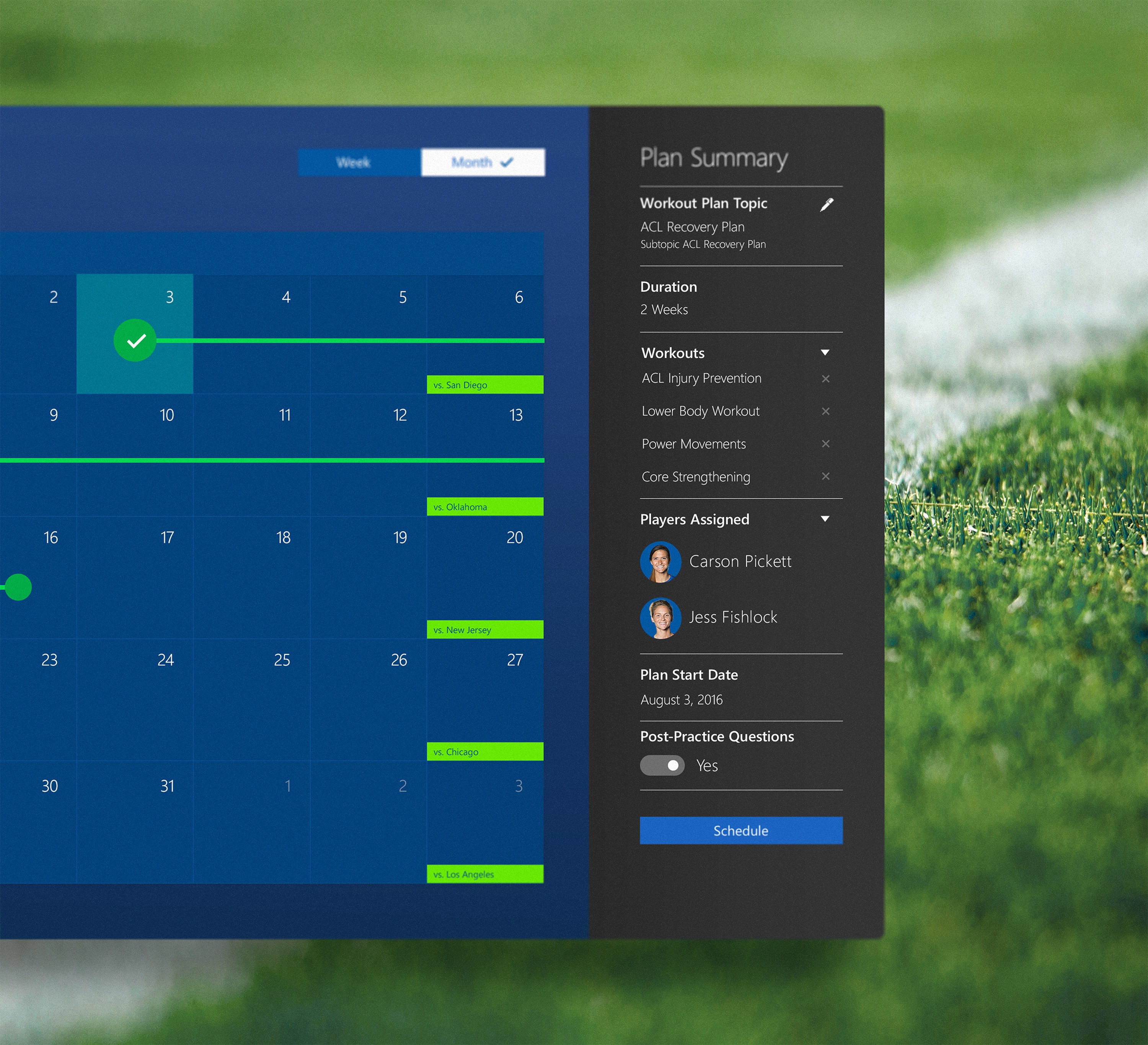
A persistent sidebar enabled coaches to maintain a clear view of all of the choices they had made during the creation or scheduling of a workout plan.
True to the essence of team sports, one of the greatest parts of this project was the sense of active collaboration with my team members throughout the project. The ability to quickly bounce ideas off of each other, a sense of trust and rigorous critiques lead to an atmosphere of learning and quick development. The resulting application is a testament to that collaboration and sense of trust with one other.
This work was written about in The Seattle Times and Engadget.

" height="2.1187359513420594px" id="P5kIJB7Ko" transform="translate(4.268 0)" width="11.73219480873486px"/><path d="M 2.13 11.637 L 0 11.637 L 0 0 L 2.13 0 Z" fill="rgb(15, 14, 14)" height="11.636652122173734px" id="xBplekXaY" transform="translate(13.87 0)" width="2.1296344887445002px"/><path d="M 1.509 14.942 L 0 13.447 L 13.563 0 L 15.073 1.496 Z" fill="rgb(15, 14, 14)" height="14.94221869628454px" id="DEz5S9WYM" transform="translate(0 1.058)" width="15.072818848944806px"/></g></svg>)
Contact
↴